
Horrible Nieghbors Lead 2 Bogus Noise Complaints
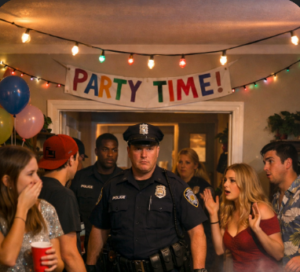
The Science of Silence: Using Decibel Monitoring to Bulletproof Your Next Event
We’ve all seen it happen—or perhaps lived through it. The guests have just arrived, the background music is at a level where you can still hear the ice clinking in the glasses, and the “party” is really just a polite gathering. Then comes the dreaded knock. It’s the local police, or perhaps a disgruntled property manager, citing a noise complaint from a neighbor three floors up or two houses down.
When a neighbor calls in a bogus noise complaint, it often has less to do with actual volume and more to do with personal friction or “subjective annoyance.” To a sensitive neighbor, the mere idea of a party is enough to trigger a call to the authorities. Without objective data, it becomes your word against theirs—and in the eyes of local law enforcement, the easiest way to keep the peace is often to shut the event down entirely. This is where the transition from “subjective opinion” to “objective data” becomes a host’s greatest asset.
Understanding how to use a decibel reader is no longer just for acoustic engineers; it is a vital tool for any responsible host or property manager. Furthermore, for high-stakes events or sensitive locations, partnering with professional firms like Hub Investigative Group provides a layer of security and objective documentation that DIY methods simply cannot match.
The “Nuisance” Trap: Fact vs. Friction
The primary challenge with neighborhood noise is that “loud” is an opinion, but decibels are a fact. Many bogus complaints are filed because a neighbor simply dislikes the host or is anticipating noise that hasn’t actually happened yet. In high-density areas like Boston or Cambridge, where historic architecture often shares walls with modern living, noise egress—the leakage of sound from one property to another—is a primary source of civil friction.
By having a decibel reader active from the moment the first guest walks in, you create a “receipt” of the evening. If a neighbor claims the music was “shaking the walls” at 8:00 PM, but your logs show a consistent reading of 55 dB (roughly the volume of a quiet dishwasher), you have the evidence needed to dismiss the complaint as unfounded.
Understanding the Decibel: More Than Just a Number
Before you can control noise, you have to understand how it is measured. A decibel (dB) is a logarithmic unit used to describe the intensity of sound. Because the scale is logarithmic, an increase of 10 dB represents a sound that is ten times more intense.
-
60 dB: A normal conversation or a quiet office.
-
75 dB: A vacuum cleaner or a noisy restaurant.
-
85+ dB: The threshold where sustained exposure can begin to cause hearing damage and where most municipal “nuisance” ordinances begin to take effect.
If your gathering stays within the 60–70 dB range, it is legally and practically difficult for anyone to justify a noise citation. However, without a meter, you are simply guessing.
How to Use a Decibel Reader Effectively
If you are managing your own event, a handheld digital sound level meter (or a high-quality smartphone app calibrated to a known source) is your first line of defense. Here is how to use it to prevent a shutdown:
-
Establish a Baseline: Before the guests arrive, take a reading of the “ambient” noise. This is the sound of the empty room or the street outside. This is your “Floor.”
-
Identify the Hot Spots: Sound doesn’t travel equally in all directions. Stand at your property line or in the hallway outside your unit. This is where the police or a disgruntled neighbor will be standing.
-
The “Egress” Check: Place your reader against the shared wall of a neighbor. If you can hear the “thump” of the bass and the meter is spiking, you need to adjust your subwoofers. Low-frequency sound (bass) travels through physical structures much more easily than high-frequency sound.
-
Continuous Monitoring: Designate a “Noise Captain.” As a party grows and people speak louder to be heard over the music (the Lombard Effect), the decibel level will naturally creep upward.
The Professional Edge: Why Hub Investigative Group?
While a handheld reader is great for quick checks, it lacks the weight of professional testimony and technical precision required for high-end events or long-term noise disputes. Hub Investigative Group approaches noise monitoring through the lens of private investigation and security auditing.
1. Objective, Third-Party Documentation
If a neighbor is prone to making frivolous complaints, having a licensed investigative firm on-site changes the dynamic. Hub Investigative Group uses professional-grade acoustic equipment to provide a timestamped, calibrated log of decibel levels throughout the night. If the police arrive, you can present an objective report showing that your event remained within legal limits.
2. Advanced Surveillance and Monitoring
Hub doesn’t just look at a screen; they analyze the “egress.” Using specialized monitoring techniques—including the potential use of vehicle-mounted technology or remote sensors—investigators can track how sound moves from your backyard into the surrounding environment. This allows for real-time adjustments to speaker orientation and volume before a complaint is even filed.
3. Liability Protection
For corporate events, a noise violation isn’t just an inconvenience; it’s a liability that can impact future permits. Hub’s investigative approach ensures that every decibel is accounted for, providing a “defensive shield” of data that protects the host from legal repercussions or fines.
Proactive Strategies for Noise Mitigation
Beyond monitoring, here are three ways to keep the “loud” in check:
-
The 11 PM Pivot: At 11:00 PM, transition from a “dance floor” setup to “lounge” levels. Switch off the subwoofers and rely on smaller, directional speakers.
-
Sound Buffering: Use heavy curtains or specialized acoustic blankets over windows. Windows are often the weakest point in a building’s acoustic envelope.
-
Neighborly Diplomacy: The best way to prevent a noise complaint—even a bogus one—is to be a person, not a nuisance. Inform your neighbors of the event in advance and provide a direct phone number. If they can call you instead of the police, you can lower the volume and keep the party going.
Conclusion: Balance is Key
A successful event is one where the guests go home happy and the neighbors go to sleep undisturbed. By using a decibel reader, you take the guesswork out of hosting and provide yourself with a vital defense against exaggerated or false claims. However, when the stakes are high—whether due to the size of the event or a history of neighborhood disputes—professional oversight is the gold standard.
Noise complaints, Noise complaints, Noise complaints, Noise complaints, Noise complaints, Noise complaintNoise complaints
By leveraging the expertise of Hub Investigative Group, you aren’t just monitoring volume; you are investing in peace of mind. Let the data do the talking so you can focus on the celebration.
References
-
Massachusetts General Laws (M.G.L.): Part IV, Title I, Chapter 214, Section 1B. This statute addresses the right to privacy and is often cited in cases involving “unreasonable” noise and nuisance. Municipal codes, such as the Boston Air Pollution Control Commission (BAPCC) noise regulations, provide the specific decibel limits for residential and commercial zones.
-
Environmental Protection Agency (EPA): Information on Levels of Environmental Noise Requisite to Protect Public Health and Welfare with an Adequate Margin of Safety. This document establishes the foundational science of “Safe” vs. “Nuisance” noise levels (specifically the 55 dB outdoors / 45 dB indoors guidelines) used by many investigative firms to determine acoustic egress.
- YouTube Video
Noise complaints, Noise complaints, Noise complaint
Noise com Noise complaints, NoiNoise complaints, Noise complaints, Noise complaint
Noise Complaintsse complaints, Noise complaint